How to Get Rid of Mold in a Bathroom in Sachse, TX
Most bathroom mold is a surface problem you can clean. Some is a sign of a hidden leak. This guide shows how to tell the difference and what to do.
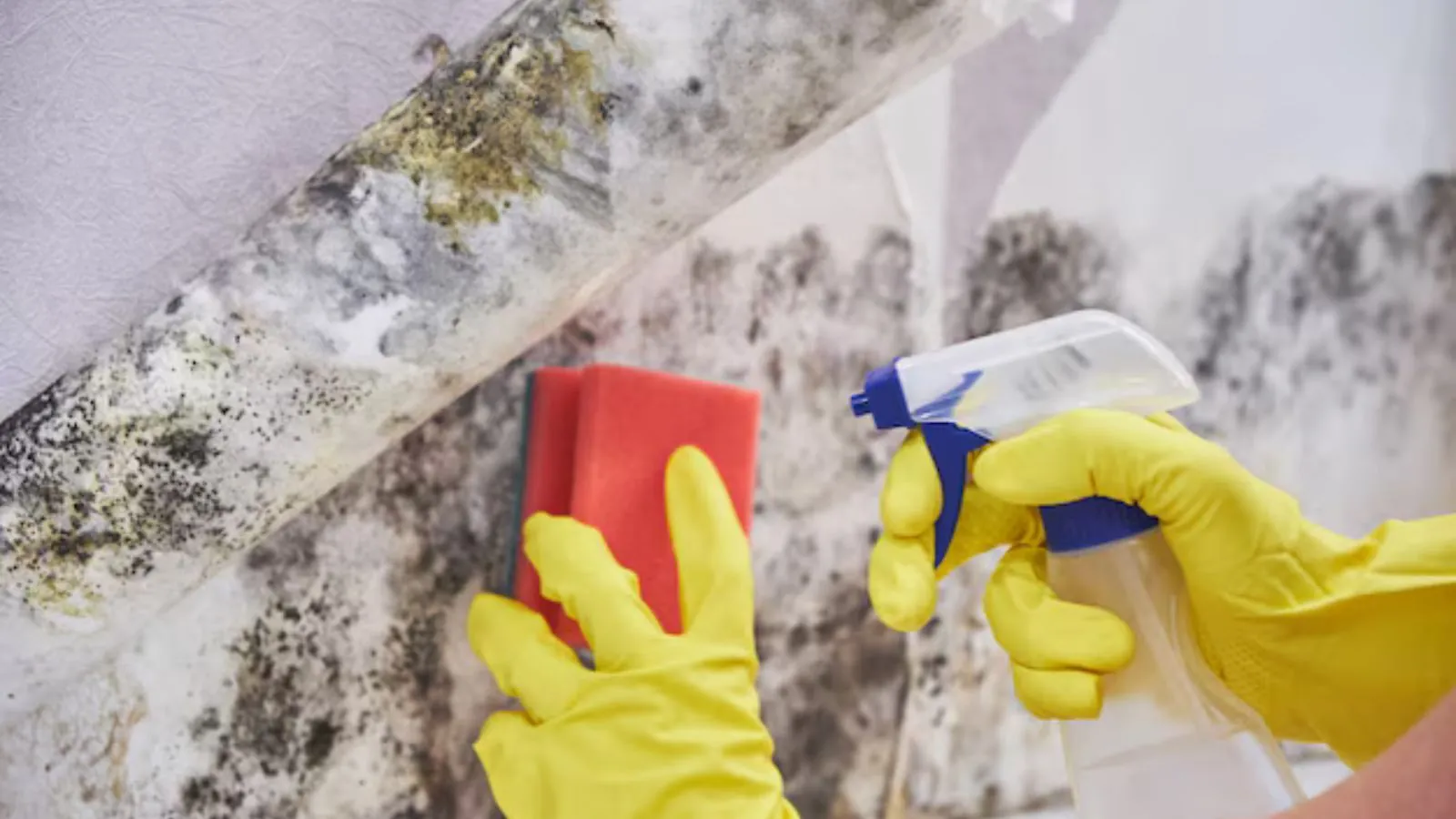
To get rid of mold in a bathroom, clean the surface with detergent and water, dry it fully and fix whatever keeps it wet, such as poor ventilation or a hidden leak. Small spots on tile, grout and caulk are a normal home cleaning job. Spots that return, soft drywall or growth beyond a small area point to moisture inside the wall.
Start with the cause
Showers add moisture to a small closed room every day. Without ventilation, the walls, ceiling and grout stay damp and mold finds a home. That kind of mold is a housekeeping and ventilation issue. A second cause is a leak: a failing shower pan, a loose supply fitting or a dripping drain behind the wall.
Check the signs of a leak. Loose tiles, soft drywall, staining on the ceiling below or a musty smell that never goes away all point to water beyond the surface.
Cleaning steps for small surface mold
- Protect yourself. Wear gloves, eye protection and a mask, and open a window.
- Scrub with detergent. Use a brush on tile, grout, tub and caulk lines.
- Rinse and dry. Wipe with a clean cloth and run the fan.
- Replace bad caulk. Remove stained caulk and reapply after the area is dry.
- Keep products separate. Never combine bleach with ammonia or acid cleaners.
Porous materials are different. If grout is crumbling, drywall paper is soft or a vanity base has swollen, those pieces usually need replacing rather than cleaning.
Fix the ventilation
Look at the bathroom fan. It should vent to the outside, not into the attic. Run it during the shower and for a while after. If the fan is weak or noisy, it may not be moving enough air. Leave the door open after showers and wipe wet surfaces to reduce standing water.
A fan that runs but leaves the mirror fogged for an hour is not doing its job. Replacing it is often cheaper than repeated cleaning.
When it is more than surface mold
Call a professional if the mold covers more than a small patch, if it returns within weeks, if drywall is soft or if you see it on the ceiling of the room below. A crew can use a moisture meter, open the wall if needed and dry the cavity. See water mitigation for how drying works.
Texas licenses mold professionals. The Texas Department of Licensing and Regulation requires a licensed remediator for 25 contiguous square feet or more, and an assessor and remediator cannot work the same project. Ask for the license and a written plan.
Tools and supplies that help
A stiff brush, a spray bottle of detergent solution, microfiber cloths, a squeegee and a fresh tube of mildew-resistant caulk cover most jobs. A cheap moisture meter lets you compare the wall near the shower to a dry wall elsewhere in the house, which tells you quickly whether the problem is surface or structural.
Keep a bag handy for discarded caulk and cloths. Wash cloths separately and dry them completely, since damp rags can carry growth to the next room.
Habits that keep the room dry
Squeegee the shower walls after use, hang towels so they dry, and run the fan until the mirror clears. Fix dripping faucets quickly, since a constant drip keeps one patch wet all day.
Once a month, look at the caulk line, the corners and the ceiling above the shower. Catching a stained patch early keeps cleanup to a few minutes. Waiting until it spreads turns a chore into a repair.
Sachse notes: water and slab homes
Sachse customers receive treated water supplied by the North Texas Municipal Water District. The 2025 water quality data lists hardness between 96 and 200 parts per million. Mineral deposits on fixtures are common with hard water and can be cleaned the same way, but a white crust around a fitting is also worth checking for slow weeping.
The City of Sachse maintains water lines up to your meter. After the meter, a leak in the bathroom is a private repair. Slab foundations are common in North Texas, so a leaking drain can wet the slab edge and walls rather than a basement below.
After cleaning
Dry the room fully, keep humidity down and recheck in a week. If the spot returns, treat it as a leak until proven otherwise. When damaged materials have to be replaced, water damage repair covers the rebuild.
We serve Sachse, Rowlett and Wylie. Call (972) 945-2885 to talk through what you see.
Frequently asked questions
Wear gloves and eye protection, ventilate, scrub hard surfaces with detergent and water and dry completely. Never mix cleaning products.
If the area is larger than a small patch or the surface is soft, stop and get advice.
Usually the moisture source was not fixed. A slow supply leak, a failing shower pan or poor ventilation keeps the area damp.
Cleaning removes the growth, not the cause.
Only if it vents outside, moves enough air and runs long enough after a shower. A fan that vents into the attic puts the moisture there.
Check where the duct ends.
Texas rules let unlicensed people clean visible mold under 25 contiguous square feet. Areas of 25 contiguous square feet or more require a licensed remediator.
Most bathroom spots on tile and grout fall below that size.
Water spreading right now? Call the 24/7 line
A restoration crew can be sent to Sachse and nearby towns around the clock. Tell dispatch what happened and what you can see.
☎ Call (972) 945-2885