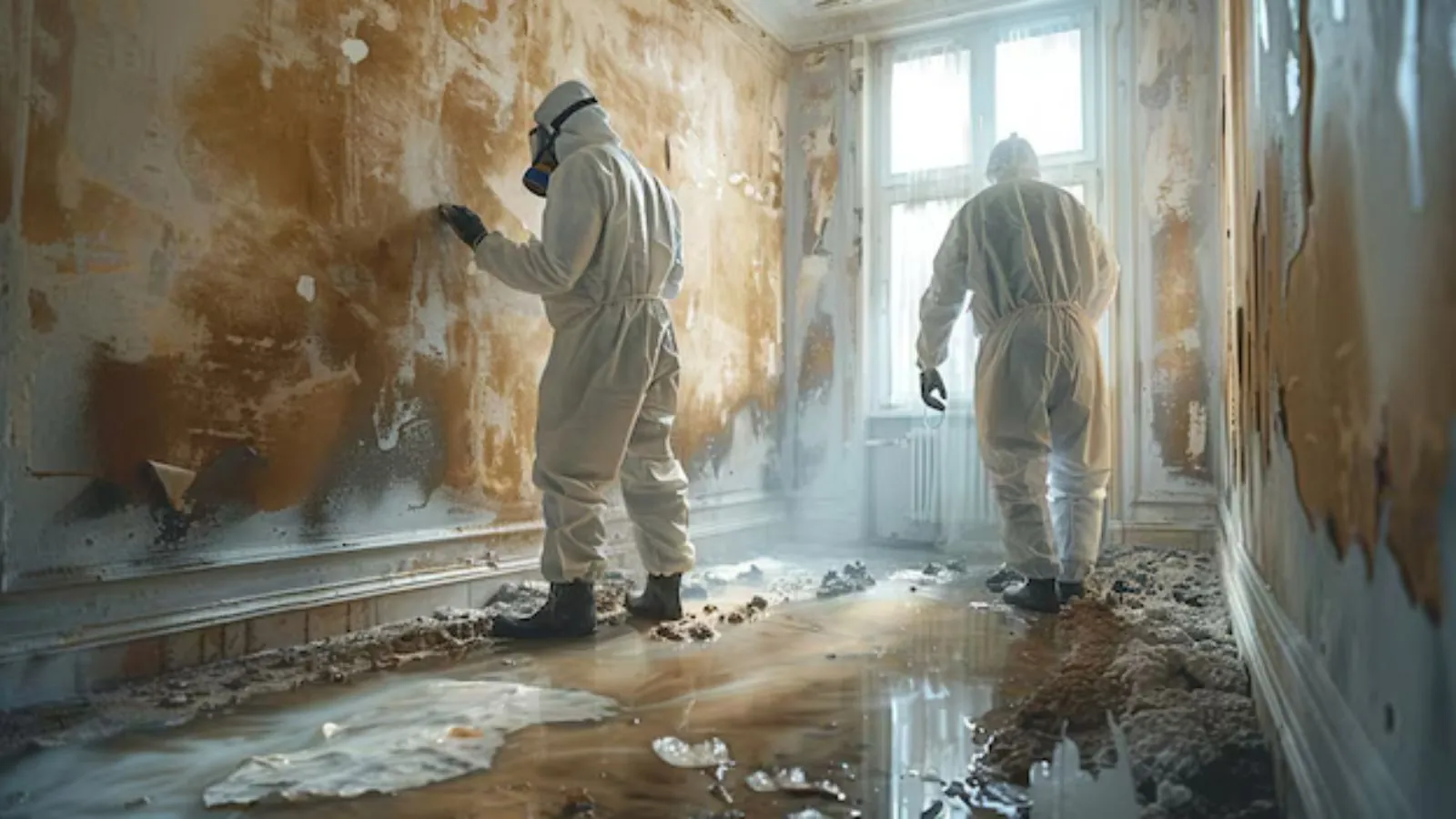
Mold Remediation in Sachse, TX
Mold needs moisture, so the fix starts with the leak. We explain testing, containment and removal under the ANSI/IICRC S520 standard and Texas licensing rules.
Mold remediation in Sachse follows a leak, a humid closet or a ceiling that stayed damp, and it only works if the moisture is gone. Our line is open 24/7 for active leaks, and mold visits are scheduled once the source is found. Do not scrub, bleach or spray visible growth before it is assessed, because disturbing it can spread it through the home.
I see spots on the wall: is this mold remediation?
Homeowners rarely begin with a mold remediation plan. They find dark spots in a bathroom corner, a musty closet after a leak or a stain that returned after painting. All of those point to moisture that stayed too long.
Remediation is the controlled removal of mold-affected material under a written protocol. It follows an assessment that finds the extent and the moisture source. Without fixing the source, new growth returns, so a plumber or roofer often comes first.
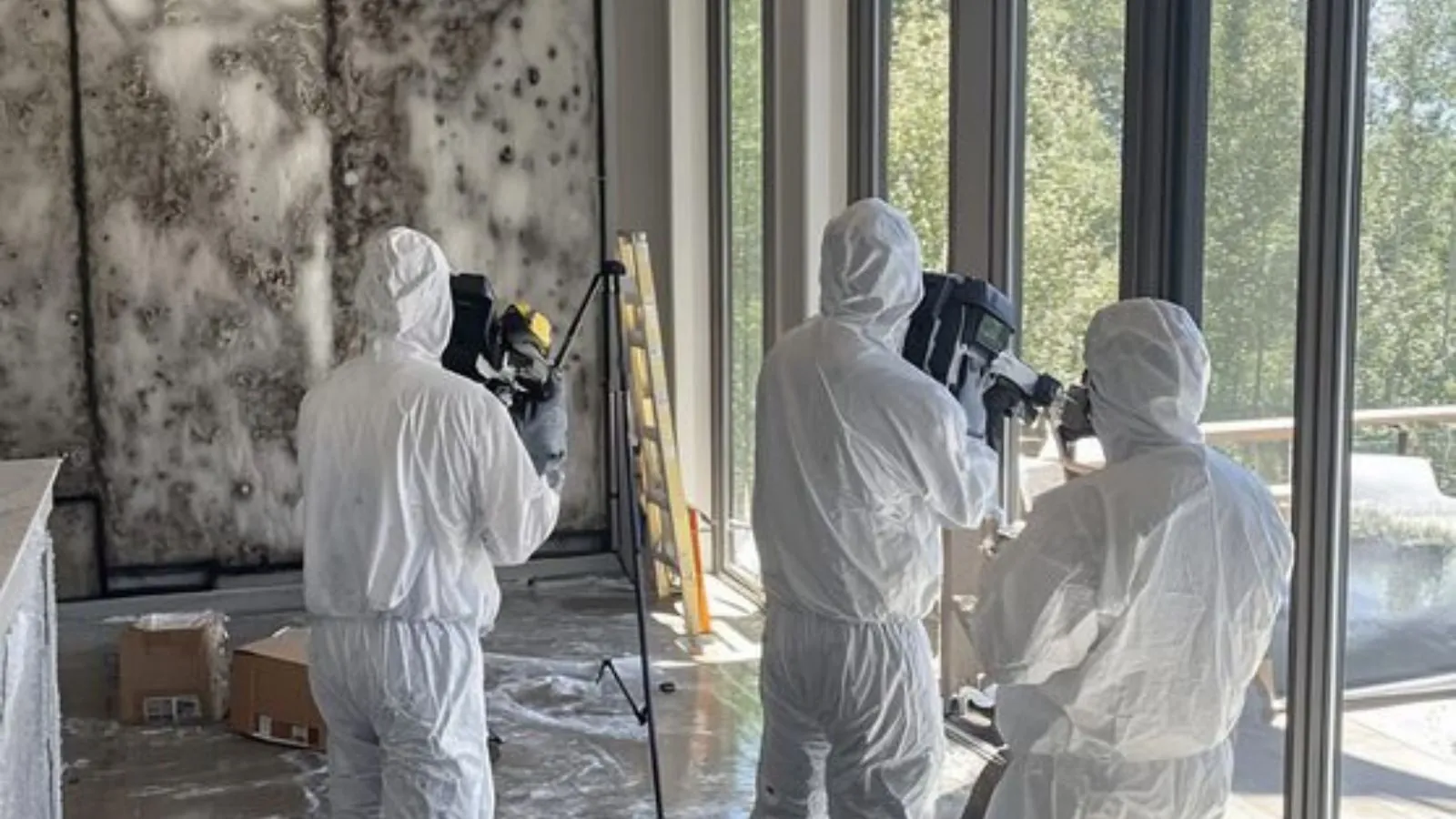
Mold after a leak is the usual pattern
- A toilet, sink or shower leak. Water gets behind cabinets and walls where air cannot reach.
- An air conditioner drain line backing up. Condensate soaks ceilings and closets.
- A roof or siding leak. Water enters through the attic and runs down walls.
- A past flood or burst pipe that was not fully dried. Moisture stays in framing and subfloor.
- Persistent humidity in a closed room. Bathrooms and closets without airflow collect moisture on surfaces.
Mold can begin growing within a day after a leak, according to the Texas Department of Insurance. That is why prompt drying through water mitigation is the best mold prevention.
Mold testing and inspection: what to expect
Testing answers two questions: is it mold, and how far has it spread. An assessor inspects the area, uses a moisture meter and thermal imaging, and may collect samples for a lab. The result becomes a written protocol that tells the remediator what to remove and how to contain it.
In Texas, anyone providing mold assessment must be licensed with the Texas Department of Licensing and Regulation, and the same company cannot do both the assessment and the remediation on one project. That separation keeps the clearance check independent.
If you call about an inspection, dispatch explains which step you are at. Some callers need an assessment first. Others already have a protocol and need a remediation contractor. Callers who ask about independent clearance testing are pointed to licensed assessors, since clearance has to come from a party that did not do the removal.
How remediation is done
Remediation under the ANSI/IICRC S520 standard centers on containment, removal and cleaning. Plastic sheeting and negative air machines keep spores from moving into clean rooms. Mold-affected drywall and porous materials are cut out and bagged. Surfaces that can be saved are cleaned with HEPA vacuums and damp wiping.
Then the area is dried and checked again. A final clearance check by the assessor confirms the work met the protocol before the walls are closed. No honest company promises that mold will never return, because that depends on whether moisture comes back.
Mold removal and black mold cleanup
Color does not tell you how serious a problem is. Black, green and white growth all call for the same moisture-first approach. A dark patch on a bathroom ceiling and a spread of staining behind a wall can both call for assessment.
If the visible area is under 25 contiguous square feet, TDLR rules let unlicensed people clean it. Larger areas require a licensed remediator and a state notification. Wear gloves and eye protection if you decide to clean a small area, and keep the work contained. Questions about health effects are for your physician.
Mold after water damage
When water damage is dried in time, mold usually never starts. The risk grows when a loss goes unnoticed, such as a slow leak inside a wall, or when wet drywall is painted over. If you see mold weeks after a loss, the original dry-out was incomplete.
In that case water damage cleanup comes first to remove wet materials and the remediation follows. Afterward, water damage repair closes the walls. The order matters, and repair crews should see clearance results before they cover the area.
Cost factors for mold work
The area affected, the type of material, whether containment and negative air are needed, the number of rooms, testing and clearance costs, and the rebuild afterward drive the scope. Small surface jobs differ greatly from mold inside wall cavities.
The Texas Department of Insurance says most homeowner policies do not cover mold from gradual leaks, and many exclude mold cleanup and testing. Ask your insurer before deciding. Call (972) 945-2885 and describe the damage.
Serving Sachse and nearby towns
We take mold calls in Sachse ZIP 75048 and in Garland, Rowlett, Wylie and Lavon.
Frequently asked questions
Visible fuzzy or spotted growth, a musty smell and staining near a past leak are common signs, but only testing by a licensed assessor can confirm what is growing. Some stains are dirt, soap scum or mineral scale.
If you are unsure, call and describe what you see. Health questions belong to your physician.
Yes. The Texas Department of Licensing and Regulation licenses mold assessors and remediators, and anyone providing mold assessment in Texas must be licensed. A company cannot do both assessment and remediation on the same project, except in a school district's own projects.
Ask any company for its TDLR license number and check it before work starts.
TDLR requires a notification when the visible mold covers 25 contiguous square feet or more and remediation will be conducted. Areas smaller than 25 contiguous square feet can be cleaned by people who are not licensed.
A licensed remediator files the notification and the work follows a written protocol.
The Texas Department of Insurance says most home policies do not cover mold from gradual leaks or seepage, and many do not include mold cleanup and testing after a damaged item is removed. Mold that follows a covered sudden and accidental loss may be treated differently.
Read your policy and ask your insurer. We cannot promise coverage.
Lenders and buyers often ask for written proof that mold was addressed. In Texas that usually means a licensed assessor writes a remediation protocol and, after the work, performs a clearance check. Because one company cannot do both assessment and remediation on the same project, the assessor is a different party.
We cannot promise any lender will accept a result, so ask yours what it requires.
The emergency line is open 24/7, but mold itself is rarely an emergency. Active water is. If a leak is still running or a ceiling is wet, call at any hour so water mitigation can begin.
For existing mold, dispatch schedules an assessment visit.
Water spreading right now? Call the 24/7 line
A restoration crew can be sent to Sachse and nearby towns around the clock. Tell dispatch what happened and what you can see.
☎ Call (972) 945-2885