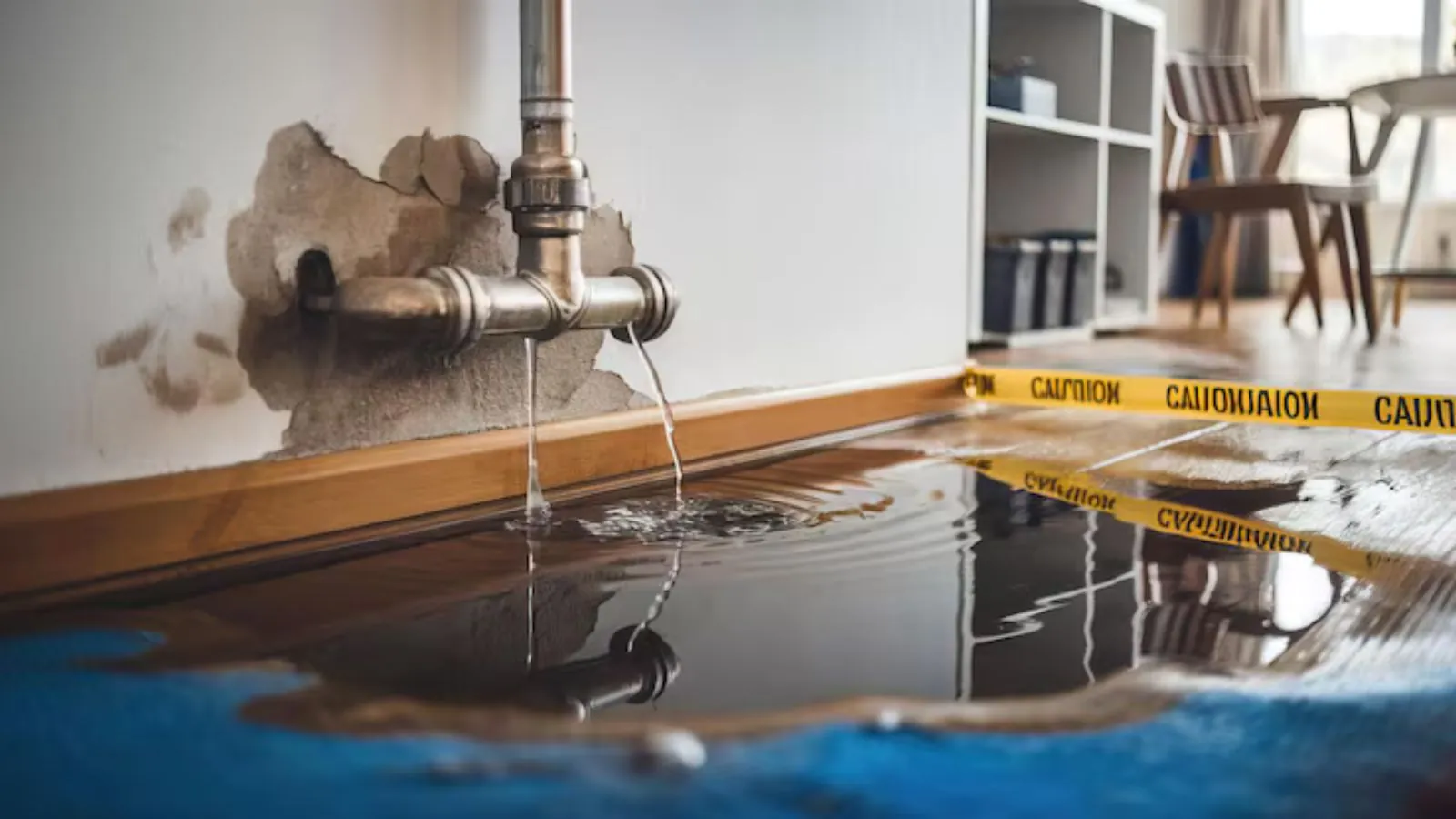
Emergency Water Mitigation in Sachse, TX
The first 24 to 72 hours decide how much of your home can be saved. Dispatch is open 24/7 and sends crews to Sachse, Garland, Wylie, Rowlett and Lavon.
Water mitigation in Sachse is the work that happens before any rebuilding: stopping the source, pulling out standing water and drying the structure while the damage is still shallow.
If water is spreading right now, our 24/7 line is open, so call first and read the rest afterward. Until a crew arrives, close the main water valve if you can reach it safely, switch off power to wet areas only if the panel is dry to reach, and move rugs, shoes and valuables off wet floors.
Walls feel damp and the carpet squishes: is this mitigation?
Most people do not search for mitigation. They search for a wet wall, a ceiling stain that keeps spreading, a carpet that squishes underfoot or a musty smell that arrived a week after a leak. All of those mean water is sitting in materials that can still be dried.
Mitigation is the name of the job that dries them. A technician finds where the water went, removes what can be removed and sets drying equipment so the structure reaches normal moisture levels. The sooner it starts, the more of the drywall, flooring and cabinetry stays in place.
When standing water is an emergency
- Water is still running. Shut the main valve. Every minute adds to the wet area.
- Water is near outlets, the panel or appliances. Stay out of the water and call the utility or 911 for any electrical or gas concern before you call us.
- The water came from a sewer line. Keep people and pets out and do not try to clean it yourself.
- Ceilings are bulging or dripping. Place a bucket, poke nothing and keep everyone out from under the sag.
- It is late and you are tempted to wait until morning. Moisture keeps moving into wall cavities overnight, so a night call is worth making.
What a mitigation visit includes
Crews begin with a walkthrough and a moisture map. A pin or pinless moisture meter gives readings on walls, baseboards and floors, and a thermal imaging camera shows cooler wet areas that the eye cannot see. Those readings become the baseline for the job.
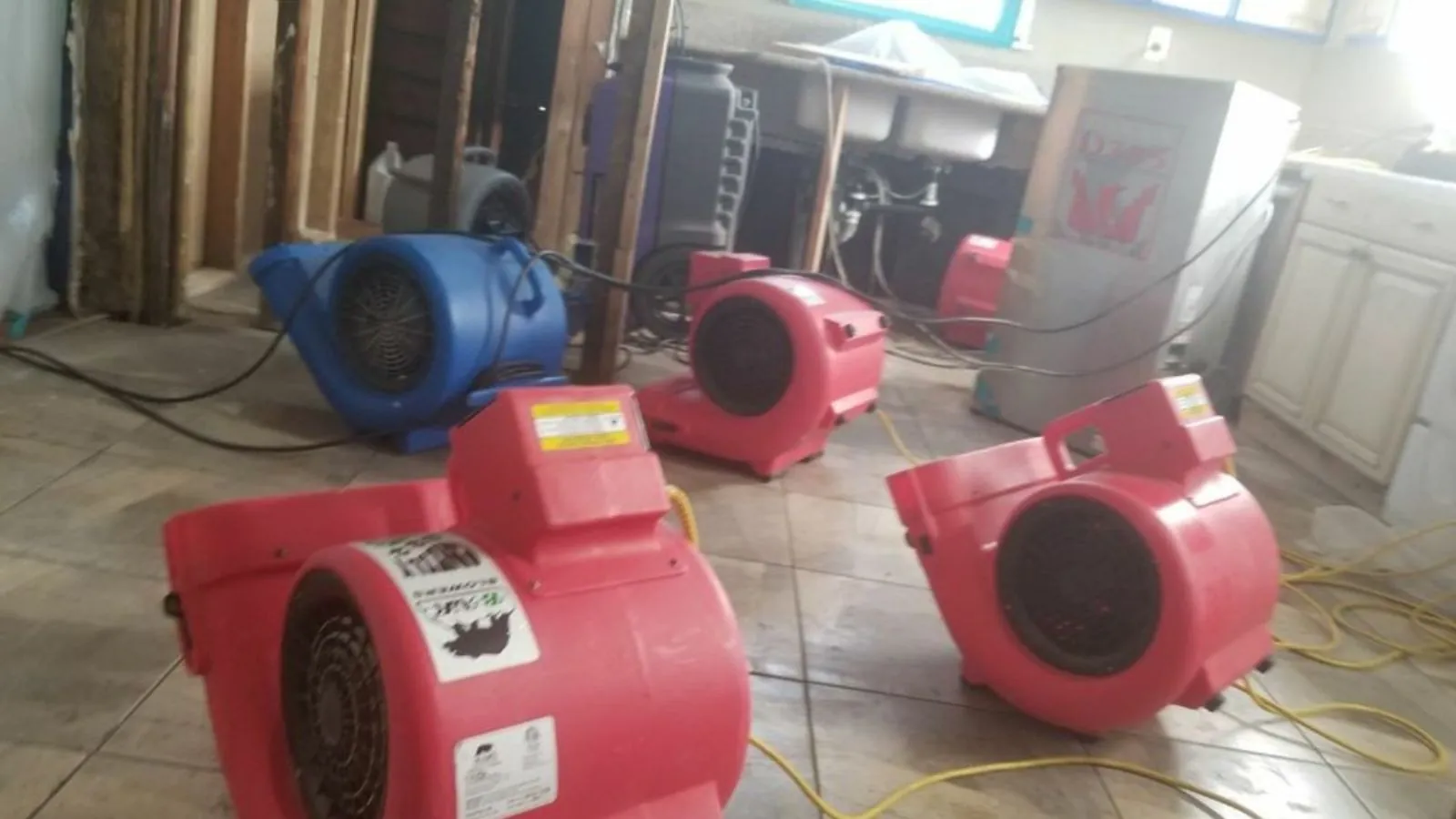
Next comes removal. Extraction units pull standing water from floors, and wet materials that cannot dry in place, such as saturated carpet pad, are cut out and bagged. Baseboards may be removed so air can reach the wall cavity. Then air movers and low-grain refrigerant dehumidifiers are placed to push dry air across wet surfaces and pull moisture out of the room.
Structural drying: how it works and how it is measured
Structural drying is the part most homeowners never see done well. Water soaks into drywall, wood framing, subfloor and cabinet bases, and surface dryness tells you nothing about what is behind it. The ANSI/IICRC S500 standard for water damage restoration treats drying as a measured process, with readings taken at the start and on each visit.
Technicians record the moisture content of affected materials and compare them with a dry reference reading from an unaffected part of the home. Equipment is adjusted as the numbers fall. When readings reach the target, the equipment comes out. That documentation also gives your insurer a clear record of what was wet and how it was dried.
You can ask any company whether its crews work to S500. A good answer describes readings and equipment placement in plain words.
Mitigation, cleanup and repair are different jobs
Each stage answers a different question, and mixing them up is how homeowners end up paying for the wrong thing. Mitigation asks how to stop the water from doing more harm. Water damage cleanup asks how to remove debris, sanitize and deodorize once the source is stopped. Water damage repair asks how to rebuild drywall, flooring and finishes after everything is dry.
On many Sachse jobs one crew handles the first stage and a different trade finishes the rebuild. Ask for the drying records so the next contractor does not have to guess what was wet.
What affects the price of mitigation
Price is set by the water category, the square footage of wet material, the materials involved, the number of days of equipment and whether sewage or floodwater is involved. A clean supply line leak caught within a day costs less than the same leak found after a long weekend away.
We do not give a flat price over the phone for a job we have not seen. A technician measures first, then explains the scope and price before work starts. Check your policy for sudden and accidental water damage, because the Texas Department of Insurance notes that most homeowner policies cover it but usually exclude gradual leaks. Call (972) 945-2885 and describe the damage.
Sachse conditions that affect drying
Sachse buys treated water from the North Texas Municipal Water District, and the city maintains water mains and service lines up to your meter. A leak on the house side of that meter is yours to fix with a licensed plumber, and the mitigation crew can work in parallel once the line is shut off.
The 2025 city water quality report lists total hardness between 96 and 200 ppm from naturally occurring calcium. That matters for drying because mineral-rich water can leave a white film on hard surfaces, which cleaners then remove during cleanup.
Slab foundations are common in North Texas, so water from a failed supply line usually spreads through flooring and the base of walls. Drying has to reach under flooring and into wall bottoms, which is why readings are taken at several heights.
Sachse shares borders with Garland and Wylie, and the same line dispatches crews to Garland and Wylie addresses.
Frequently asked questions
Yes. The line is staffed 24 hours a day, including weekends and holidays, and a midnight call goes through the same dispatch steps as a daytime call. Response is same day when crews are available, and dispatch gives you a realistic window instead of a promised arrival time.
While you wait, shut off the water source if it is safe, lift valuables off wet floors and take photos of the damage.
Drying time depends on the materials, the water category and how far the moisture spread. The technician records moisture readings on day one and again on each visit, and equipment stays until the readings show the structure is dry.
That is why a firm number of days is not offered over the phone. The readings, not a calendar, decide when drying is finished.
A shop vacuum can lift some surface water, and fans help a little, but neither pulls moisture out of drywall cavities, subfloor or the bottom plate of a wall. Moisture left in those places is what feeds mold and warps flooring.
Professional air movers and low-grain refrigerant dehumidifiers dry the structure in a controlled way, and moisture meters confirm the result.
Mitigation stops the damage from growing by removing water and drying the structure. Restoration is the rebuild afterward, such as new drywall, paint and flooring.
You can read about the rebuild on our water damage repair page, and about debris removal and sanitizing on the water damage cleanup page.
The Texas Department of Insurance says most homeowner policies cover sudden and accidental water damage and usually exclude gradual leaks. Many policies also expect you to take reasonable steps to prevent further damage, so starting mitigation quickly is usually part of a claim.
Ask your insurer what applies to your policy. We provide photos, readings and a written scope you can send with the claim.
Water spreading right now? Call the 24/7 line
A restoration crew can be sent to Sachse and nearby towns around the clock. Tell dispatch what happened and what you can see.
☎ Call (972) 945-2885