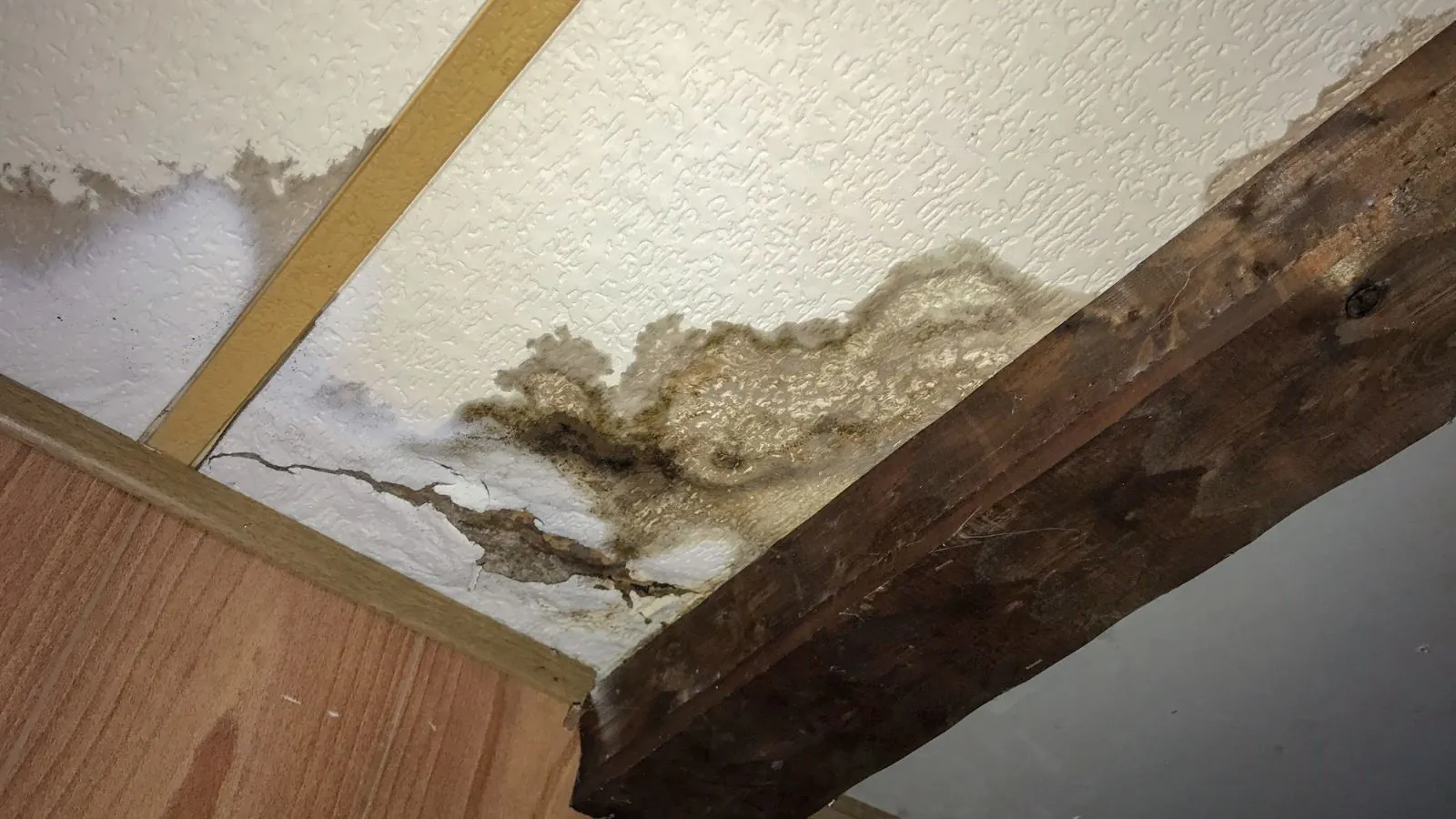
Mold in the Attic After a Roof Leak in Sachse, TX
A roof leak can wet insulation and decking long before a ceiling stain appears. Here is how to check the attic safely and decide what happens next.
Mold in the attic after a roof leak in Sachse starts with wet insulation and decking that stay damp in a hot, closed space. Stop the leak first, then check the attic from the framing, photograph what you find and call your insurer before removing anything. Mold areas of 25 contiguous square feet or more require a licensed remediator in Texas.
How roof leaks reach the attic
Water enters through failed flashing, cracked vent boots, missing shingles or a damaged valley. It runs down the underside of the deck, soaks the insulation and may travel along rafters before it shows as a ceiling stain. By the time the stain appears, the attic has often been wet for a while.
North Texas storms deliver water fast. DFW averages 37.01 inches of precipitation a year, and the December 26, 2015 EF-4 tornado crossed Sunnyvale, Garland and Rowlett on a 13-mile path, a reminder of how severe weather affects roofs in the area.
Checking the attic safely
- Wear protection. Use gloves, eye protection and a dust mask.
- Step on framing only. Insulation hides gaps between joists.
- Use a flashlight. Look at the underside of the roof deck and rafters.
- Compare areas. Dark, damp patches near the leak differ from dry wood elsewhere.
- Photograph everything. Wide and close shots help with a claim.
Go in during the cooler part of the day. Attics get very hot in a Texas summer, and heat adds risk. Leave if you feel unwell.
What mold in an attic looks like
Mold on wood often appears as dark spots or a gray to black film. On insulation it can look like discolored patches. Not every dark stain is mold, and color alone does not tell you. Old water stains can be dry and stable, while active mold sits where it stays damp.
The state insurance department notes that a wet attic can grow mold in as little as a day. A licensed assessor can sample, identify and write a plan. We do not give health advice, and anyone with health questions should talk to a physician.
Repair order that works
| Stage | Action | Why |
|---|---|---|
| 1 | Stop the leak | Nothing else holds until the roof is sealed |
| 2 | Remove wet insulation | It stays damp and holds mold |
| 3 | Dry the framing and deck | Moisture readings guide the pace |
| 4 | Clean or remove affected wood | Done under Texas licensing rules |
| 5 | Replace insulation and repair the ceiling | Rebuild after the area passes the check |
Drying the structure is covered on our water mitigation page, and rebuilding the ceiling is part of water damage repair.
The Texas rules
The Texas Department of Licensing and Regulation says that visible mold under 25 contiguous square feet can be cleaned by people who are not licensed. Larger areas require a licensed remediator and a notification. One company cannot both assess and remediate the same project.
Ask for the license, the written protocol and the post-work check. Keep those documents with your claim records.
Ventilation and the attic
Attics need airflow to stay dry. Blocked soffit vents, insulation pushed over the eaves and bathroom fans that vent into the attic all trap moist air. Even without a roof leak, a poorly vented attic can grow staining on the underside of the deck.
Check that vents are clear and that fan ducts reach the outdoors. Fixing airflow is often simpler than treating growth again and again.
Questions to ask a roofer and a remediator
Ask the roofer to show where the water entered and to document the repair. Ask the remediator what will be removed, how the area will be contained and who does the final check. Keep both sets of paperwork together for the insurer.
Sachse notes: homes, roofs and paperwork
Sachse sits on State Highway 78 in the northeast corner of Dallas County and southern Collin County. The Census Bureau puts the 2025 population estimate at 32,834, up from 27,103 in the 2020 count, and 84.7 percent of homes are owner occupied.
A re-roof or framing repair falls under the city's permit rules for building repair. A re-roof or structural repair in the attic may need one, so check with Development Services at 469-429-4781 before work starts.
Next steps
Photograph the damage, tarp or patch the roof temporarily and call your insurer. Keep fixes temporary until the adjuster has visited. If you find wet insulation, water damage cleanup can remove it and document the loss.
We serve Sachse, Garland and Wylie. Call (972) 945-2885 if you are not sure what you found.
Frequently asked questions
Look for dark or fuzzy patches on the underside of the roof deck, on rafters and on insulation, and notice any musty smell. Staining alone does not prove mold.
A licensed assessor can sample and confirm.
Step only on framing, wear a dust mask and gloves, and avoid areas where the ceiling below looks sagging. Wet insulation can hide gaps.
If the area is large or you are unsure, leave it to a pro.
DFW averages 37.01 inches of precipitation a year, and heavy storms in spring can find weak flashing or missing shingles. A roof that holds in light rain may leak in a storm.
Inspect the roof after severe weather.
Sudden storm damage is generally covered, while damage from a long-ignored leak generally is not, according to the Texas Department of Insurance. Mold cleanup is often limited.
Report the loss promptly and read the policy.
Water spreading right now? Call the 24/7 line
A restoration crew can be sent to Sachse and nearby towns around the clock. Tell dispatch what happened and what you can see.
☎ Call (972) 945-2885