Structural Drying Services in Sachse, TX: How It Works
Structural drying is the measured process of removing water from framing, subfloor and drywall. This guide explains the equipment, the readings and how long a dry-out lasts.
Structural drying services in Sachse are what stand between a leak and a mold problem. The job is simple to describe and hard to do well: find every wet material, move air across it, pull the moisture out of the air and keep checking until readings match a dry reference. If water has just entered your home, call the 24/7 line, then read the rest.
What gets wet beyond what you can see
Water does not stay where it landed. It wicks up drywall, soaks into the bottom plate of a wall and spreads through the subfloor. A room that looks nearly dry on the surface can still hold moisture in framing and insulation.
That hidden moisture is why a technician starts with a moisture map. A pinless meter reads the surface layers, and a probe meter reads inside wood. Thermal imaging shows cooler spots where evaporation is happening.
The equipment and what each piece does
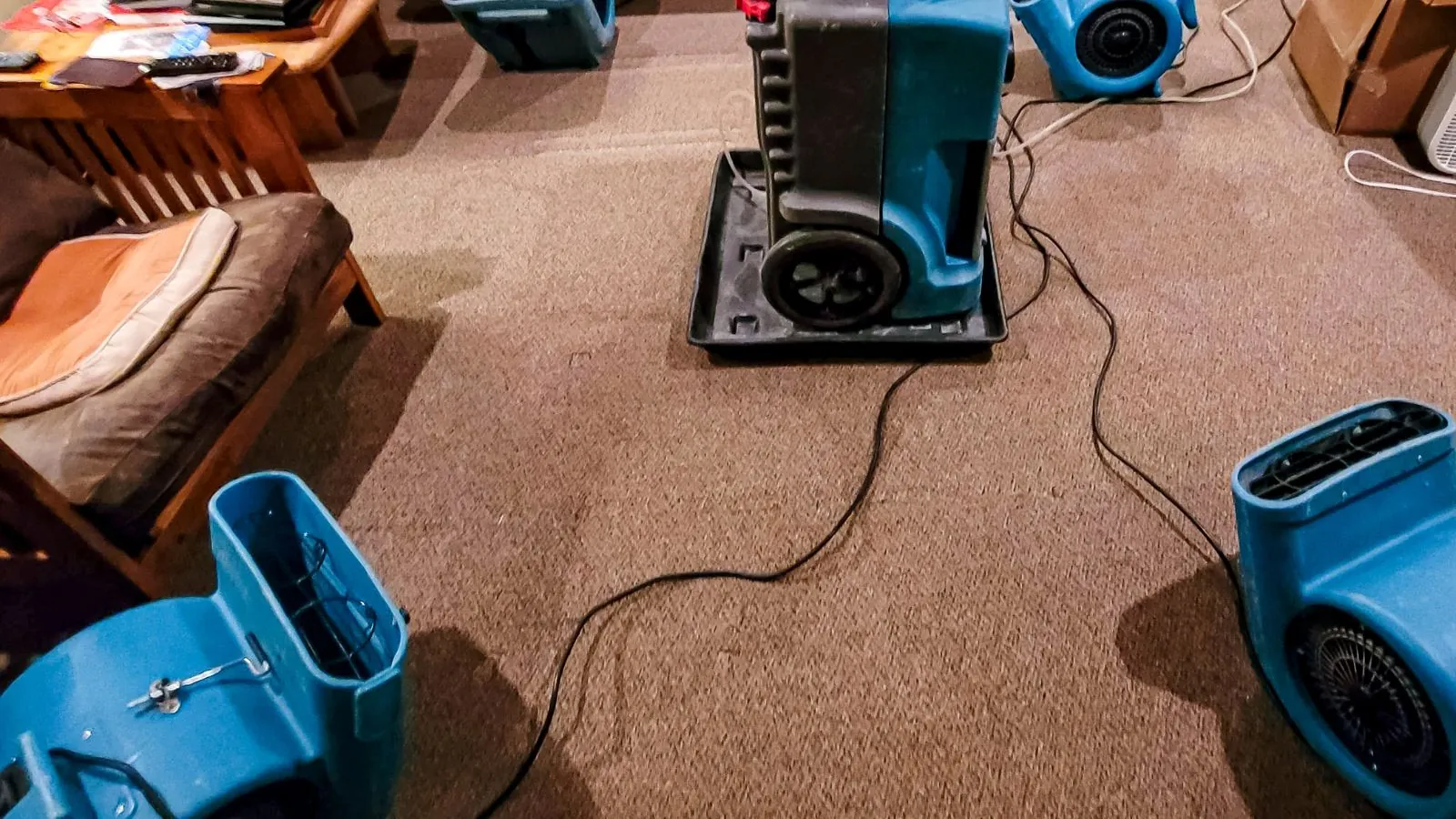
- Air movers. Fans that push air across wet surfaces to speed evaporation.
- Low-grain refrigerant dehumidifiers. Machines that pull water vapor out of the air so drying continues.
- Desiccant dehumidifiers. Used in cold or very wet conditions where refrigerant units struggle.
- Injection or mat systems. Move warm air through wall cavities or under hardwood floors.
- Moisture meters and thermal cameras. Measure progress and find hidden wet areas.
How the process unfolds
On day one, crews extract standing water, remove materials that cannot dry and place equipment. They record moisture readings in a log with the date, the material and the location. On later visits they take readings again, adjust equipment and decide whether anything else must come out.
The ANSI/IICRC S500 standard describes drying as a measured process that depends on the room's temperature and humidity, the materials and the water category. When readings reach the dry reference, equipment is removed.
What affects drying time
| Factor | Faster drying | Slower drying |
|---|---|---|
| Water category | Clean supply water | Contaminated or long-standing water |
| Materials | Tile, sealed concrete, laminate | Carpet pad, hardwood, insulation |
| Size of the area | One room | Several rooms and floors |
| Time before drying began | Hours | Days |
| Building conditions | Moderate temperature and low humidity | Cold, humid or closed spaces |
Why readings beat a calendar
Anyone who tells you a house dries in exactly three days has not looked at your readings. The right measure is moisture content, not time. A wall that reads dry at the surface might still be wet at the base.
Ask for the drying log when the job ends. It shows what was wet, how it dried and when equipment was removed. That record helps your insurer and any contractor rebuilding the area.
Signs drying is not finished
A room that feels dry may still hold moisture in studs, subfloor or insulation. Musty smells, warm damp air near baseboards and paint that blisters again are common signs. Readings should drop steadily, and they should match the reading of a known dry reference.
If equipment is removed while any material still reads high, moisture can redistribute and cause trouble later. Ask the crew for the final readings in writing.
Questions to ask the crew
Ask how many days of equipment you should expect and how readings are logged. Ask what the target reading is for each material and who decides that drying is complete. A clear drying log, with the date of each visit, is a good sign.
Sachse notes: winter freezes and thaw leaks
DFW logged 139 hours at or below freezing across February 13 to 19, 2021. The North Texas Municipal Water District then asked customers to curtail non-essential water use from February 17 until February 25, 2021, and warned that thawing would cause more ruptured pipes.
That pattern repeats in smaller form whenever a hard freeze ends. Pipes split while frozen and release water when they thaw, often inside walls. Slab foundations are common in North Texas, so water tends to spread across floors and into wall bottoms, which is where drying focuses.
Drying is one stage
Drying sits between emergency water removal and the rebuild. It is the same stage described on the water mitigation page. Afterward, water damage repair handles replacement.
We serve Sachse, Garland and Lavon. Call (972) 945-2885 if the walls feel damp days after the leak.
Frequently asked questions
It depends on the materials, the water category and how far water spread. A technician records readings on day one and each visit, and equipment stays until readings reach the dry reference.
A firm number of days cannot be given before readings are taken.
Air movers and dehumidifiers run continuously, and dehumidifiers add heat as they pull moisture from the air. Rooms often feel warm and dry during a dry-out.
The noise and warmth are signs the equipment is working.
It can, but options narrow. Materials that sat wet for days may need removal, especially after contaminated water. A technician decides what can be saved with readings.
Mold can begin within a day of a leak, the state insurance department notes, so call as soon as you can.
Yes, because the equipment runs for days. Ask the technician how many units are placed and for how long.
Some policies include equipment costs as part of a covered loss, so ask your insurer.
Water spreading right now? Call the 24/7 line
A restoration crew can be sent to Sachse and nearby towns around the clock. Tell dispatch what happened and what you can see.
☎ Call (972) 945-2885