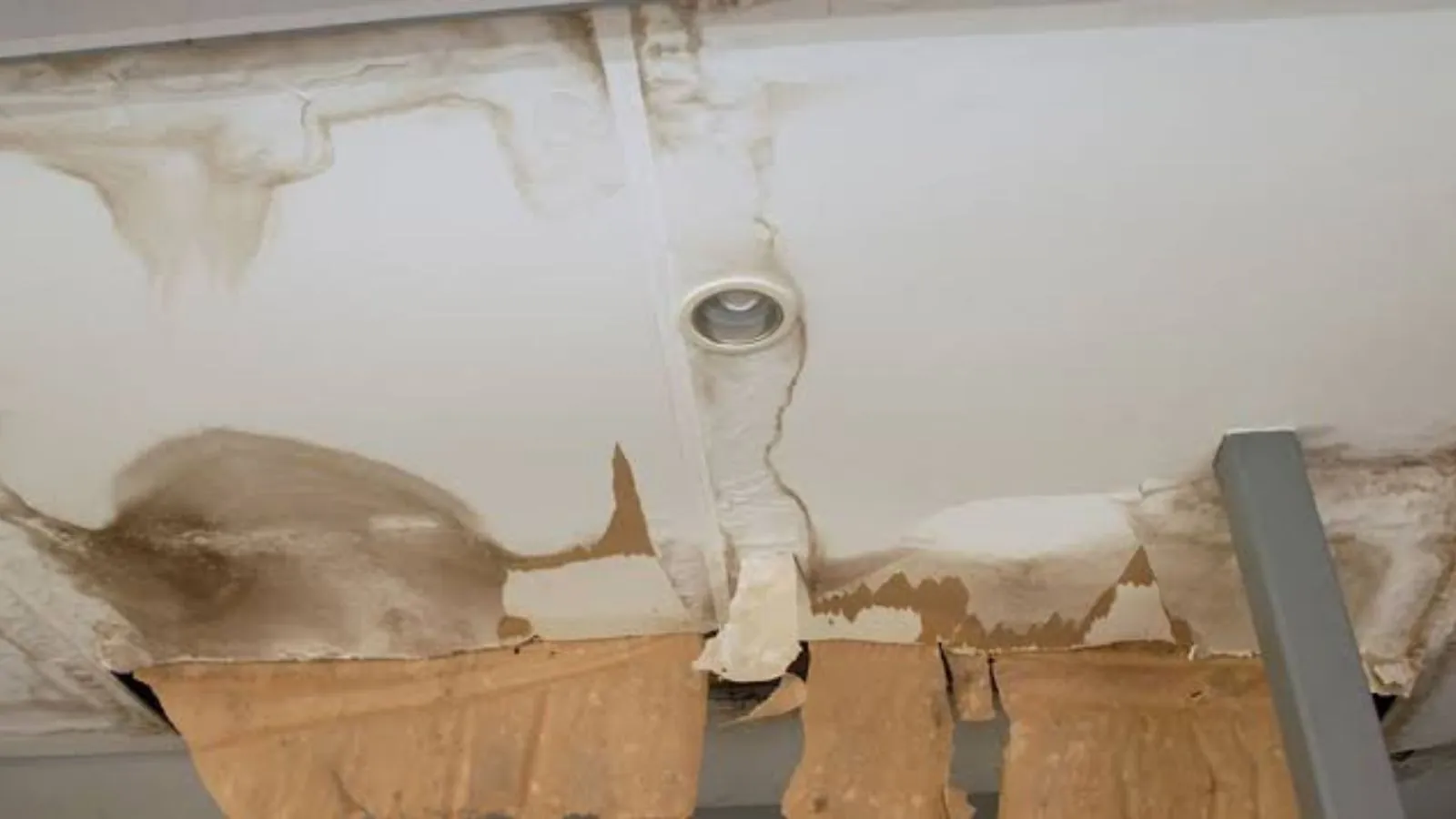
Water Damaged Ceiling in Sachse, TX: What to Do First
A brown ring, a sag or a steady drip all mean water is above your ceiling. The next hour matters more than the repair, so start with safety and the source.
A water damaged ceiling in Sachse needs three things in order: keep people safe, stop the water above and dry the ceiling and attic or room above it. Do not paint over the stain. If the ceiling is sagging or dripping, keep everyone clear, place a bucket and call our 24/7 line, because wet drywall is heavy and can fall.
Reading the stain
A stain is a clue. A brown ring with a darker outer edge usually means water arrived in more than one stage and dried between them. A bubbling area means water is trapped right now. A sag means drywall has absorbed enough water to lose strength.
Location tells you the source. A stain under a bathroom points to a toilet, tub or supply line. A stain near an exterior wall may point to the roof or a window. A stain in a hallway can come from an air handler drain line in the attic.
Make the area safe
- Keep clear of a sagging area. Move furniture and people out from under it.
- Place a bucket under drips. Use a tarp if the drip is steady.
- Turn off the light fixture and switch if wet. Use the breaker if the panel is dry to reach.
- Shut off water to the room above. The main valve is the fallback.
- Photograph the ceiling, the room above and any wet insulation.
Find and stop the source
If the room above is a bathroom, check the toilet supply, the shower valve and the tub overflow. If the ceiling is under an attic, look for wet insulation, a rusted drain pan or a clogged condensate line. Roof leaks usually show after rain, while plumbing leaks continue when the weather is dry.
Do not climb into an attic with wet insulation, since boards and drywall may not hold weight. Call a plumber, roofer or HVAC technician as needed, and ask the restoration crew to find the extent of moisture with a meter and thermal imaging.
Dry first, then repair
Water in the drywall cavity and attic insulation does not leave on its own. Air movers and dehumidifiers pull moisture out, and damaged drywall is cut out in clean lines so the repair is simple. The process is water mitigation followed by a repair, and it should end with dry readings before any patch goes up.
The water damage repair page explains ceiling repair in detail, including texture matching and stain-blocking primer. For a flood from a burst pipe, emergency water removal comes first.
Signs the damage is bigger than the stain
A stain that grows after the leak is fixed means the area was not dried. A bulge or sag means the drywall has absorbed water and may hold more above. Peeling paint, a musty smell or a rust ring around a fixture all point to a larger wet area.
Check the attic or the room above if you can do so safely. Wet insulation looks flattened and dark, and it can hold water for a long time. Damp framing in the same area needs drying before any new drywall goes up.
Questions to ask a contractor
Ask whether the quote includes moisture readings, removal of wet insulation and priming for stains. Ask how the new texture will be matched, and whether the whole ceiling will be repainted. A patch that looks fine in daylight can show under evening light if the sheen differs.
Ask also who takes responsibility if the stain returns. A contractor who confirmed the area was dry before closing it up can answer that clearly.
Sachse notes: when stains appear after cold snaps
DFW's 1991 to 2020 National Weather Service normals put the January average low at 36.1 degrees, and the average first freeze falls around November 22 with the last around March 12. The February 2021 freeze dropped DFW to minus 2 degrees on the 16th, and the cold lasted well over five days.
Pipes in attics and exterior walls can split while frozen and leak after the thaw. If a ceiling stain appears days after cold weather, treat it as a possible thaw leak.
Insurance and documentation
The Texas Department of Insurance says most homeowner policies cover sudden and accidental water damage, such as a burst pipe, and usually not gradual leaks. It tells homeowners to report hidden damage within days and to leave permanent fixes until an adjuster has looked.
Take photos of the stain, the source and any removed material. Keep damaged drywall pieces if the insurer asks to see them. For Sachse, Garland and Wylie addresses, the same line takes the call. Call (972) 945-2885 if the stain is spreading and you want it checked.
Frequently asked questions
Only if a professional advises it. Water held in a bulge can release at once, and the drywall can fall with it. Light fixtures and wiring in the area add risk.
Place a bucket under the lowest point, keep clear and call.
Frozen pipes often split while frozen and leak only after thawing. DFW averages its first freeze around November 22 and its last around March 12, so a stain in winter can be a thaw leak.
Shut the water to that area and call for a leak check and drying.
Tell the owner or property manager right away and photograph the damage. In a rental or an HOA community the responsible party may be different from you.
We can dry and document the damage regardless of whose pipe failed.
Stains can also come from condensation, smoke or old paint. A moisture meter or thermal camera tells you whether the area is wet now.
A stain that grows after a rain or a shower is an active leak and needs attention.
Water spreading right now? Call the 24/7 line
A restoration crew can be sent to Sachse and nearby towns around the clock. Tell dispatch what happened and what you can see.
☎ Call (972) 945-2885